Leading Authors of Today's Magazine
  • Home
  • Editorial
  • Featured New Authors
  • Anthologies
    • Moguls Unleashed
      • Dr. Dashnay Holmes is a Dynamic Entrepreneur!
      • Dr. Jane Mukami
      • Dr. Demaryl Roberts-Singleton
      • Dr. Desirie Sykes
      • Dr. Terry Golightly
      • Dr. Shontae Davidson
      • Dr. Adrienne Velazquez
      • Dr. Nichole Pettway
      • Dr. Daniela Peel: Corporate Wellness
  • News and Updates
  • More
    • Multimedia
    • Author of the Month
    • Book Reviews
    • Interviews and Conversations
    • Community and Engagement
    • Writing Resources
    • Genre Explorations
No Result
View All Result
Leading Authors Of Today's Magazine
No Result
View All Result

Book Review: Anthony Hecht’s ‘Collected Poems’ and ‘Late Romance: Anthony Hecht — A Poet’s Life,’ by David Yezzi

June 12, 2024
in Genre Explorations
0
Home Genre Explorations
0
SHARES
0
VIEWS
Share on FacebookShare on Twitter
Book Review: Anthony Hecht’s ‘Collected Poems’ and ‘Late Romance: Anthony Hecht — A Poet’s Life,’ by David Yezzi


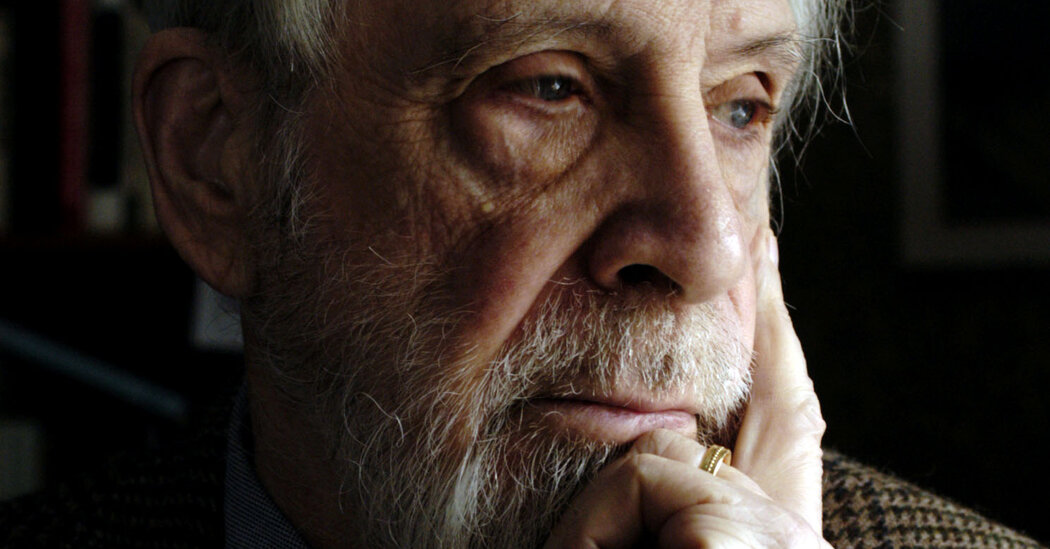
Hecht, who died in 2004, is usually tagged with words like “mandarin” and “formalist” and grouped into a cadre of American poets born in the 1920s that includes Richard Wilbur and James Merrill. But in many ways, Hecht was different. He was Jewish, for one thing, an identity that, when Hecht was a young man, was fraught not only in the world of American literature (then under the spell of T.S. Eliot), but in many of the country’s elite spaces. As Yezzi notes, when Hecht was preparing to attend Bard, his father suggested he “change his name to something less Jewish sounding, to avoid discrimination.”

The Second World War was the lodestone of Hecht’s poetry, if not his life. He served in combat units but deliberately never shot at anyone, a decision that gave him, as Yezzi writes, “an excruciating sense of moral compromise.” Because of his language skills, Hecht was assigned to translate interviews after the liberation of the Flossenbürg concentration camp. Yezzi quotes a letter Hecht wrote to his parents: “What I have seen and heard here, in conversations with Germans, French, Czechs and Russians — plus personal observations — combines to make a story well beyond the limits of censorship regulations. You must wait till I can tell you personally of this beautiful country and its demented people.”

The poems that stemmed from this horrific experience are the ones typically reproduced in anthologies, particularly “‘More Light! More Light!’,” which quotes words attributed to Goethe on his deathbed. Extreme subjects don’t always have to be paired with extreme forms or diction — poetry isn’t a toddler’s shape sorter — but it’s hard to read this work today without feeling a sense of mismatch, as grim scenes are delivered in filigreed writing. If a gun is about to be used to murder someone, it will have “hovered lightly in its glove.” If a bunch of killers are loitering, they will “lounge in a studied mimicry of ease.” If a poem is exploring the history of European violence, we will also have a “timbered hill,” “blue shadows” and “the crisp light of winter.”

Hecht’s best work allows his fluent intelligence to enter the scene, rather than to draw its curtains. This is notable in less dire poems like “Peripeteia,” but also in perhaps his best poem, “A Hill.” The speaker (figured as Hecht himself) is chatting comfortably with friends in a marketplace when abruptly, for no reason, the market vanishes and

in its place
Was a hill, mole-colored and bare. It was very cold,
Close to freezing, with a promise of snow.
The trees were like old ironwork gathered for scrap
Outside a factory wall. There was no wind,
And the only sound for a while was the little click
Of ice as it broke in the mud under my feet.
I saw a piece of ribbon snagged on a hedge,
But no other sign of life. And then I heard
What seemed the crack of a rifle. A hunter, I guessed;
At least I was not alone. But just after that
Came the soft and papery crash
Of a great branch somewhere unseen falling to earth.

And that was all, except for the cold and silence
That promised to last forever, like the hill.

The vision of the hill ends, the market returns, but “for more than a week/I was scared by the plain bitterness of what I had seen.” The betrayal in “‘More Light! More Light!’” is that when light is called for, no light appears. Here, the same lack of response seems bleaker, because there’s no betrayal at all — this is simply how things are. “At least I was not alone.” But he is alone; he’s always been alone.



Read More

Previous Post

Green Book (2018) – Tony’s Job Interview Scene (1/10) | Movieclips

Next Post

Batwoman’s Cursed New Weapon Proves the “No Guns” Rule Has Its Limits

Next Post
Batwoman’s Cursed New Weapon Proves the “No Guns” Rule Has Its Limits

Batwoman's Cursed New Weapon Proves the "No Guns" Rule Has Its Limits

Leave a Reply Cancel reply

Your email address will not be published. Required fields are marked *

Random News

Bob Eckstein Has the Perfect Museum for You

Bob Eckstein Has the Perfect Museum for You

...

Book Trailer Edgar Allan Poe – Great Books Alive Book Trailers by Producer Tony Rollo

Book Trailer Edgar Allan Poe – Great Books Alive Book Trailers by Producer Tony Rollo

...

AKU celebrates Authors’ Day | The Aga Khan University News

AKU celebrates Authors’ Day | The Aga Khan University News

...

Sarah Ferguson’s new book will be dedicated to her four grandchildren with the Duchess of York revealing she uses her writing as ‘an escape’ from her two cancer diagnoses

Sarah Ferguson’s new book will be dedicated to her four grandchildren with the Duchess of York revealing she uses her writing as ‘an escape’ from her two cancer diagnoses

...

Belleville, NJ Author Publishes Fiction Book

Belleville, NJ Author Publishes Fiction Book

...

Three-day 15th Karachi Literature Festival to commence this week

Three-day 15th Karachi Literature Festival to commence this week

...

About us

Today's Author Magazine

Welcome to Today's Author Magazine, the go-to destination for discovering fresh talent in the literary world. We shine a light on new authors and captivating anthologies, providing readers with a diverse array of stories and insights. Here's a look at the vibrant categories that make up our magazine

RecentNews

Bishop Funke Adejumo: Writing Her Legacy Into Nations

Elevating Leadership, Empowering Women: The Journey of Dr. Janet Lockhart-Jones

Leading with Words: The Transformational Journey of Dr. Mark Holland

Faith, Healing, and Resilience: The Empowering Voice of Elaine King

Categories

  • Anthologies
  • Author of the Month
  • Book Reviews
  • Community and Engagement
  • Editorial
  • Featured
  • Featured New Authors
  • Genre Explorations
  • Global Influence
  • How-to
  • Interviews and Conversations
  • Multimedia
  • News and Updates
  • Other
  • Uncategorized
  • Writing Resources

RandomNews

The Bookseller – Rights – Little Island Books signs Lauren O’Hara to illustrate new edition of Oscar Wilde’s children’s stories

Beginner’s Guide To Being A Writer – Tony DuShane [FULL INTERVIEW]

A Book Club Began ‘Finnegans Wake’ in 1995. After 28 Years, It Finally Reached the End

Cool book! Book vlog #3 #fypシ゚viral #viral #reading #books #cool #shorts #subscribe :)

Best audiobooks for travel, from 16 hours to 3

  • Home
  • About
  • Privacy
  • Terms
  • Contact

© 2024 Today's Author Magazine. All Rights Are Reserved.

No Result
View All Result
  • About
  • Contact
  • Home
  • Moguls Unleashed
  • Privacy
  • Terms

© 2024 Today's Author Magazine. All Rights Are Reserved.