
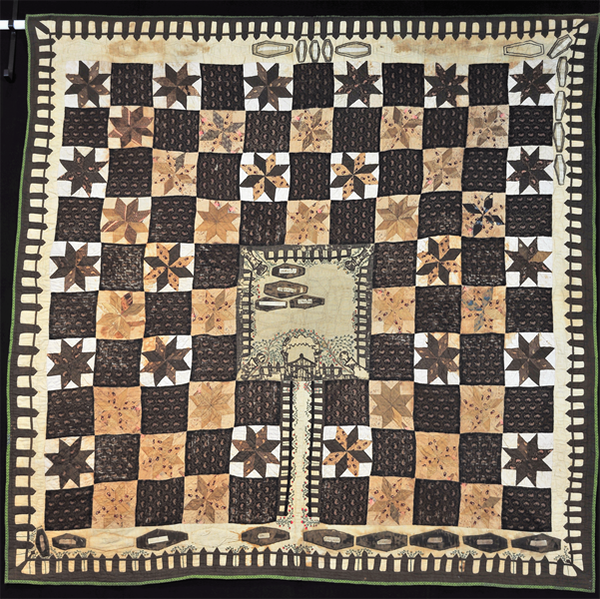
By Steve Flairty
NKyTribune Columnist
Like I figure many of you do, I’ve often found pleasure in the simple act of snuggling under the comfort of a patchwork quilt handcrafted by someone I know. Stretching the thought further, conversations about the process, where the patch pieces originated, and little history lessons about those quilts are interesting to have. The elements of comfort, beauty, and appreciation for the craft and corresponding remembrances make the subject, I believe, culturally and personally enriching.

For an information junkie like me — yet one who has known little about the historical context of quilts in our state — a real dandy of a resource has come along. Thanks to the passionate work of author Linda Elisabeth La Pinta, her 328-page social history, Kentucky Quilts and Quiltmakers: Three Centuries of Creativity, Community, and Commerce, more than fills the information gap for me. Not only that, but it can also rightly be characterized as easily readable with a strong personal touch. That “touch” is demonstrated by including many oral accounts of individual Kentucky citizens, and those add even more credibility to her offering.
The author states that her book “is written for a general reader interested in an overview of ways in which women’s communication, history, and material culture have developed, intersected, and continue to converge in Kentucky.” Sounds like a fascinating look at our state’s social “fabric,” doesn’t it?
LaPinta starts by sharing her love of her grandmother’s Dresden Plate-patterned quilt, “completed twenty years before I arrived,” and how it sparked her imagination. She mentions the quilt pieces in Grandmother’s handiwork “derived from fabrics that had experienced interesting places and survived exciting times. Indeed, Grandmother’s quilt suggested intriguing stories.”
And those stories of such, along with compelling background information on quilts and quiltmakers, is what LaPinta gives readers, in spades.
Kentucky Quilts is divided into three main parts, starting with “Tracing the First 125 Years, C. 1775-1900.” The author discusses early frontier needlework that evolved into commerce in the early 1800s and beyond. She eloquently describes nineteenth century Kentucky quilts and adds interesting tidbits on sewing machines and cotton batting. LaPinta informs us that Blacks certainly played a role in the evolution of quilt culture.
During those first 125 years starting in 1775, she noted that besides covering a bed, quilts “could also convey personal, partisan, and even activist messages, giving a voice to women, who, although they had little legal power and no right to vote, possessed the savvy and the skills to transform ‘women’s work’ into significant material statements.”
LaPinta closes Part One by discussing the special part quilting played in the of Civil War, then works to debunk two myths of quilt history. The idea that the participators in the Underground Railroad network, an organized effort to help escaping slaves from the South to freedom northward, used a “quilt code” of cryptic messages on quilts to aid the process, is simply a legend with little supporting evidence, she notes. Another common perception debunked by the author, is that the Pleasant Hill Shakers, near Harrodsburg, and the Shakers of South Union, Kentucky, were a strong presence in quilt culture. It simply was not the priority of those groups that many understood it to be.

Her second part is entitled “Altering the Aesthetic and Celebrating the Legacy, C. 1900-2000.” As with most processes, LaPinta said there is evolution that occurs, noting there was a “rapid revolutions of thought and social change galvanized by the machine age, quiltmakers refined their art to reflect their emerging worldviews.”
Quilt culture was confronted with mass marketing and nationwide branding, with rampant consumerism. With that new environment, “some came to regard quilts as provincial artifacts of a bygone age,” she writes. Along with that consumerism, needlework editors began advertising patterns that were popular and could be used to imitate—and sell. Advance technology contributed to the growth, and with it, duplicated quilts began appearing, so different from the individuality of early days. That said, the importance of quilts and quilt making in Kentucky culture, though undergoing steady changes, remained.
LaPinta also uses Part 2 to intimately explores the emergence of quilt contests, exhibitions, quilt associations, and looks at individuals who have become well-known influencers for the craft.
Part Three is called “Millennial Shifts in Material Culture, C. 2000-2024.” Contemporary quilt culture has its own new buzz, one might say, and the author makes that clear. Why a new buzz? The author goes so far to say that the internet “changed human communication and interaction in the last two decades of the twentieth century at least as radically as the industrial era and the machine age had earlier.”
Internet use spread the popularity of American quilts and quiltmaking to France, Japan, and elsewhere, she explains. Blogging by quiltmakers became a big thing, with Kentuckians such as Kathleen Loomis and Erin Burke Harris reaching a large audience. Award-winning Kentucky essayist Georgia Green Stamper wrote a brilliant, family-related essay for Kentucky Quilts, calling it “Our Quilts.” A whole passel of first-person testimonies are a hallmark of LaPinta’s book. Her offering is certainly quite a well-done and comprehensive one, but she mentions many other books on particular aspects of quilts and quiltmaking recently released, also.
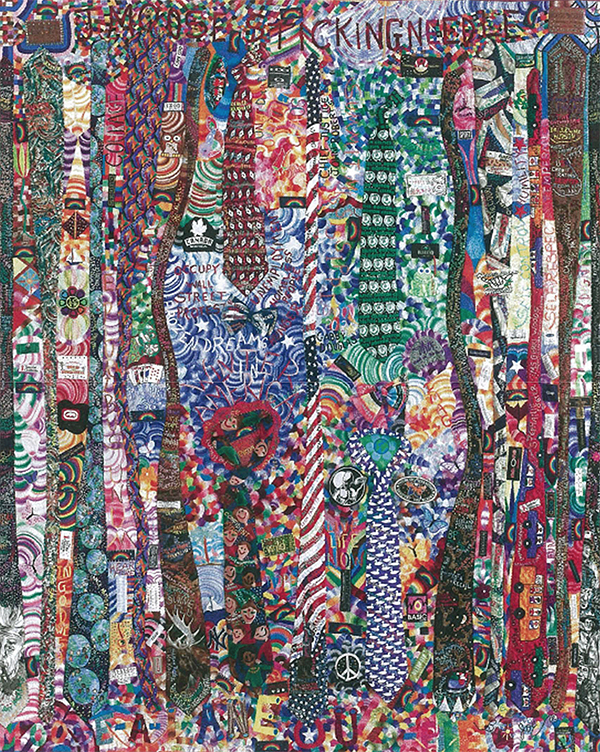
Readers discover that the number of quilt shops are declining, but many quilters shop more online. And ironicall, the pandemic probably helped spur the online increase.
Along with exploding online activity, there are now “quilt retreats,” “quilt cruises,” and “quilt seminars” on the contemporary scene. And one must not forget the influence of Kentucky’s pride and joy, the National Quilt Museum quiltmuseum.org. In summary, emphasizes LaPinta, a lot is going on in Kentucky and beyond to preserve the special history of this art of patchwork and to sustain it now and in the future.
Most proudly, perhaps, the author shares that members of quilt culture are “giving back,” helping support human needs outreach organizations in communities, the U.S., and internationally.
Five appendixes are supplied at the end of Kentucky Quilts, supplying quilting advice and contact information on the subject. It seems that the author has spared nothing in presenting a living treasure for Kentuckians and others who are keen to understand an important part of our cultural heritage.
For more information on the book, visit Kentucky Quilts and Quiltmakers at The University Press of Kentucky.