Album Review
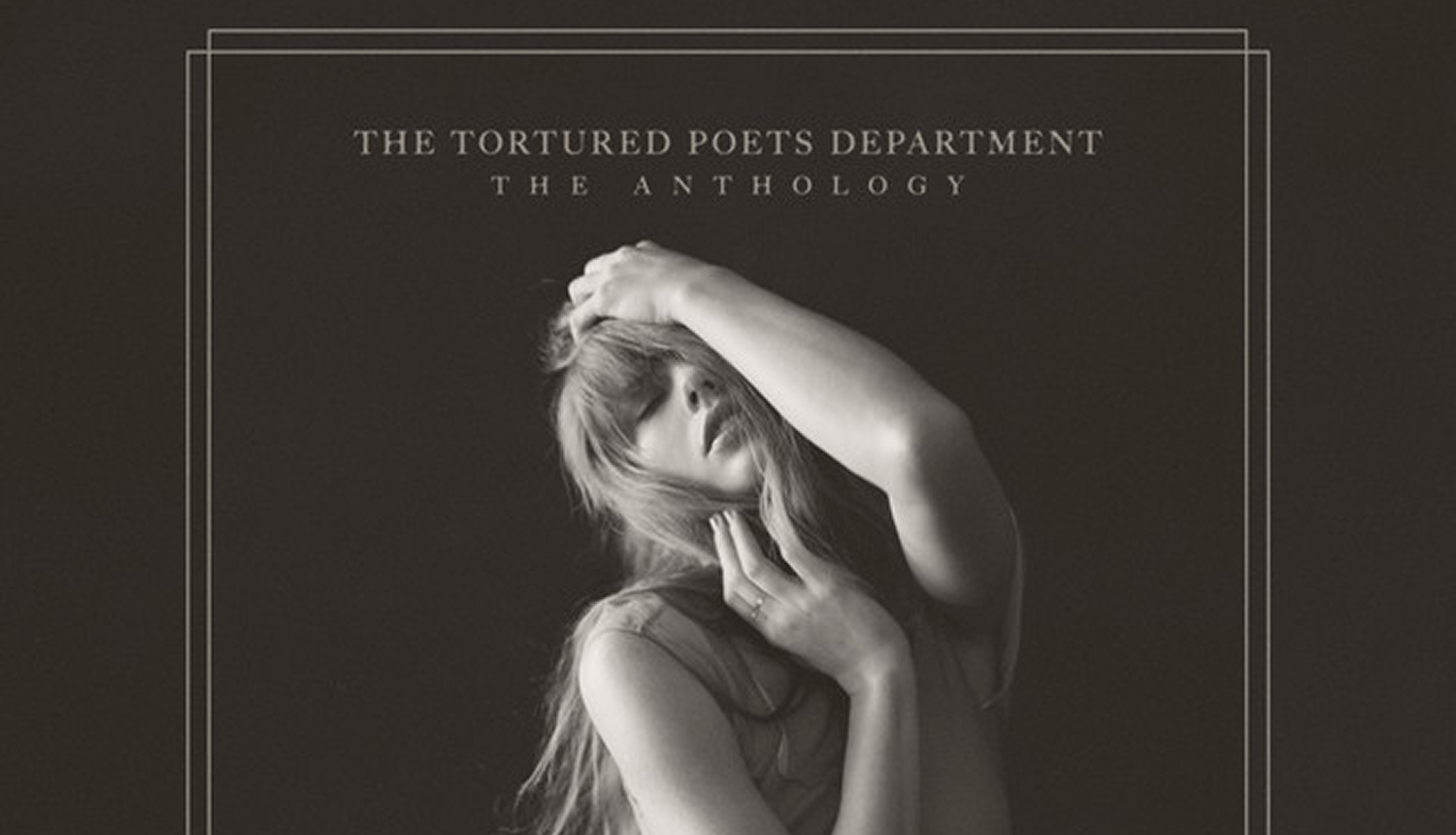
The arrival of a new Taylor Swift album is always an event that the Swifty faithful mark on their calendars like Christmas. And this time around, Swift surprised everyone with the release of her 11th album, The Tortured Poets Department. The original 17 songs showed up on streaming at midnight (Eastern time) April 19. But a couple of hours after that—wait, what’s this? Fourteen more songs?
Indeed.
Swift, ever the marketing genius, called it The Tortured Poets Department: The Anthology. A double album, she said. More like a triple album, really. And one can’t help but ponder the question: When on Earth did this 33-year-old singer have time to pen and record 31 more songs about heartbreak, love, heartbreak, tragedy, heartbreak and still more—well, you get the point. After all, she’s been jetting around the world for her Eras Tour for the last 18months and spending most other waking moments with her NFL beau, Travis Kelce.
By all accounts, they seem deliriously happy together. This album, though? More like deliriously tortured. It feels like reading Romeo and Juliet 31 times in a row.
With so much poetic angst set to music here, we’ll hit some of the most relevant lyrical issues and circle back to the bigger conversation about Taylor’s tragic romantic worldview in the conclusion.
Positive Content
At the risk of sounding like the kind of churlish, hate-filled critic that Taylor blasts on one of her tracks, there’s very little here that one could characterize as positive.
That said, perhaps we can give Swift a bit of credit for self-awareness regarding her unhealthy romantic relationships. To wit: “I love you, it’s ruining my life,” she sings in lead single “Fortnight.” Later in the song, we get a bit of vintage innocent Taylor when she sings, “At dinner, you take my ring off my middle finger and put it on the one/People put wedding rings on, and that’s the closest I’ve come/To my heart exploding.” That’s a genuinely touching lyrical moment.
But there aren’t many of those here.
Content Concerns
With each album she releases, Swift seems more and more comfortable with casual profanity. “Down Bad” includes 18 f-words, for instance, one of several songs that include that particularly harsh vulgarity. Other swearing includes the s-word, “b–ch” and “h—” on numerous tracks.
Lead single “Fortnight” (referencing a two-week period of time, not the popular game Fortnite) seems to be about a woman who’s had a brief affair with a neighbor, perhaps in part because her husband has cheated too (“My husband is cheating/I wanna kill him”).
Likewise, on “Thank You aIMee,” which purportedly is about dealing with Kim Kardashian’s criticism at one point in her career, she says of her mother’s response, “Everyone knows that my mother is a saintly woman/But she used to say she wished that you were dead.”
Songs breezily suggest sexual trysts that include lyrical references to shared beds and showers, as well as cohabitation when she keeps finding one ex’s stuff in her drawers. “So High School” nostalgically reminisces about risky adolescent behavior (“I’m watching American Pie with you on a Saturday night/ … Truth, dare, spin bottles”) as well as sex in the back of a car (“Get my car door, isn’t that sweet/ … Then pull me to the backseat/ … No one’s ever had me/Not like you/Had me.” The she adds this retrospective commentary: “You knew what you wanted, and boy, you got her.”
Nods to drinking, smoking and marijuana use turn up throughout the album as well. “Fortnight” includes the line, “I was a functioning alcoholic.”
“But Daddy I Love Him” tells the tale of a rebellious girl’s love affair with a wrong-side-of-the-tracks kind of guy—and it paints a nasty picture of judgmental churchgoers: “I just learned these people only raise you to cage you/Sarahs and Hannahs in their Sunday best/Clutching their pearls, sighing, ‘What a mess’/I just learned these people try and save you/‘Cause they hate you.” Later she adds, “I’ll tell you something right now, you ain’t gotta pray for me/Me and my wild boy and all of this wild joy/He was chaos, he was revelry.”
Another song that spiritualizes love and intimacy is “Guilty as Sin?” Suggestive lyrics hint at sexual fantasy and masturbation: “I keep these longings locked/ … These fatal fantasies giving way to labored breath/Taking all of me, we’ve already done it in my head.” Swift then asks, “Without ever touching his skin/How can I be guilty as sin?” And then Swift takes a big leap, using Christian images and themes to describe her own romanticized religion: “What if I roll the stone away?/They’re gonna crucify me anyway/What if the way you hold me is actually what’s holy?/ … They don’t know how you’ve haunted me so stunningly/I choose you and me religiously.”
There are many, many more instances of similar problems throughout this 31-song collection. But that representative sampling gives you a sense of what to expect here.
Album Summary
Taylor Swift would probably number me among those hateful, religious, pearl-clutchers in church for what I’m about to say. But I think it bears saying, because Swift practically says it herself: Romance for Swift is a religion. In fact, she says what she experiences in moments of intimacy represents something akin to worship for her: “What if the way you hold me is actually what’s holy?”
I’m honestly grateful that Swift herself has identified that core longing here. She yearns for those fleeting experiences of intimacy to transcend time and space. Indeed, on “Down Bad,” she describes a moment of soul-to-soul connection in ecstatic, cosmically transcendent terms: “Tell me I was the chosen one/Show me that this world is bigger than us/Then sent me back where I came from/For a moment, I knew cosmic love/ … For a moment, I was heaven struck.”
What she’s longing for is salvation, being unconditionally known and embraced. And she works so very, very hard to earn that salvation. Still, Swift savagely spurns those who would suggest such a thing, even though she’s so obviously seeking salvation in relationships that inevitably leave her broken and gutted.
Elsewhere, she sings, “So how much sad did you think I had/Did you think I had in me/How much tragedy?” Honestly, Swift’s appetite for tragedy seems nearly infinite, listening to song after song after song that “poetically” chronicle her black holes collapsing in on themselves. It’s a void no man can fill, no matter how passionately she longs for it. Only God will fill that space, for her, for any of us.
Now all of that said, everything I’ve written above takes Swift’s tortured personal confessions earnestly, at face value. But I think it’s also worth asking this question about her stories of tragedy and heartbreak: How much is personal, and how much is a performance? A very calculated performance, perhaps? After all, she has a reputation to uphold: No one does a breakup song—or a breakup album—like Taylor Swift.
And Swift has tapped into a seemingly infinite adolescent appetite for such romantically tragic angst. It’s the kind of affection that prompts tween and teen girls to buy four different versions of the same album, just to make sure that they’re not missing out on the complete Taylor Swift experience.
Too cynical? Maybe. Then again, no one else has ever generated a billion streams of her songs on one outlet alone.
And that should give us pause when it comes to our kids and the messages they’re ingesting.
At the surface level, I really don’t like all the harsh profanity here (more pearl clutching—sorry, Taylor), or the glorification of reckless intimacy. But I think I’m even more discomfited by the underlying worldview that millions upon millions of impressionable girls are ingesting: that romantic love is the capstone human experience.
That’s a worldview that Taylor Swift continues to lean into with all her might. And it’s one that deserves our parental attention and critique, lest it leave our daughters (and probably some sons, too) vulnerable to the kind of emotional devastation that Taylor herself plods through over and over again here.