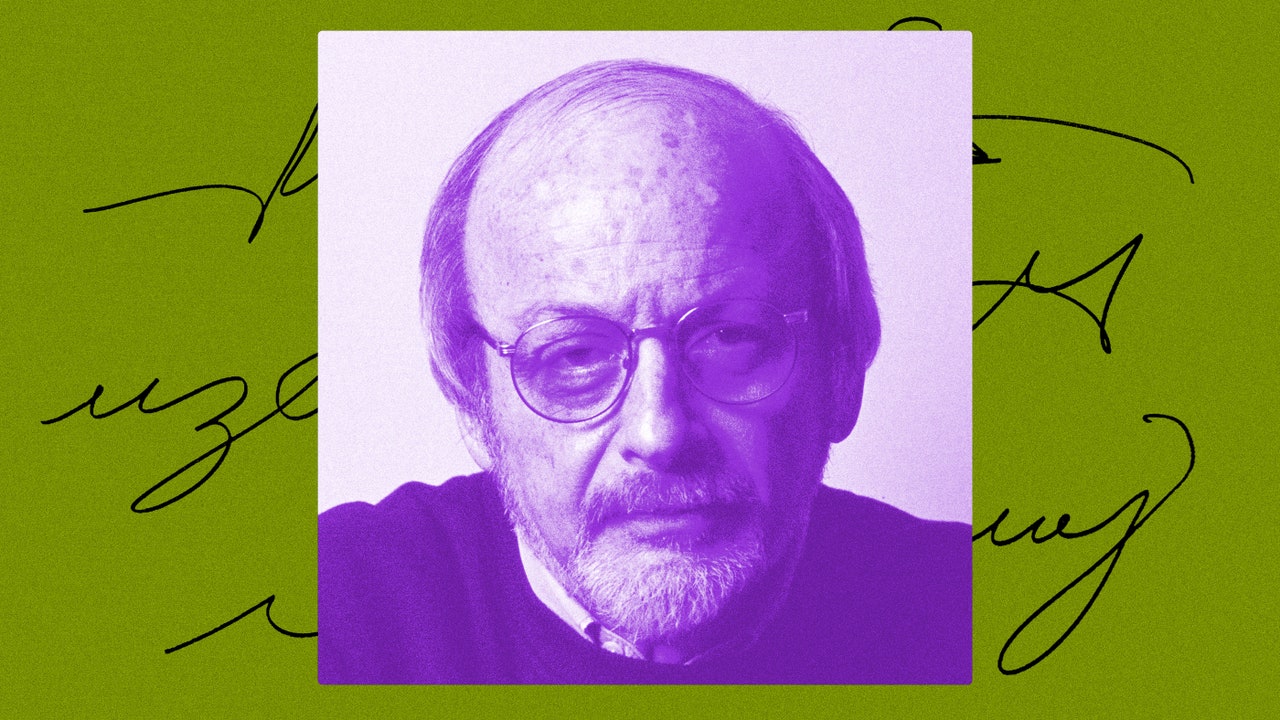
The story “The Drummer Boy on Independence Day,” which E. L. Doctorow wrote, you believe, in the mid-fifties, when he was just out of the Army himself, wasn’t published in his lifetime. Can you explain why you think that was and how you found it?
I came across the completed story and some partial drafts among Doctorow’s papers at the Fales Library and Special Collections at New York University, where Doctorow taught for many years. A handful of other stories was saved there as well, in a file marked “Juvenilia,” but “The Drummer Boy” was by far the most accomplished. Why wasn’t it published before now? That’s a good question. It’s possible that editors thought it not consequential enough, the stakes not high enough. It’s also possible that Doctorow never sent it anywhere for publication; I haven’t found any evidence of its being rejected. Doctorow acquired his first agent, Herb Jaffe, sometime in the second half of the nineteen-fifties, likely after “The Drummer Boy” was written and put aside, so the story would have had no advocate in the marketplace other than the author himself.
The story is narrated by a reporter for a small-town newspaper who is covering the annual Fourth of July celebration, where it was traditional, in that time period, to have a Civil War veteran lead the parade and deliver a speech. The speech that this particular veteran delivers is not one of patriotic triumph or a tribute to fallen brothers—and is certainly not what his audience is expecting. Do you think the story has a political or social message?
I do. Newly out of the Army, having lived through the Second World War and the dropping of the atomic bombs, and living in Cold War America, Doctorow certainly was making a point about the horrors of war, its allure in memory, and the irony of celebrating bloodshed.
Why do you think Doctorow chose this somewhat distanced perspective—of a journalist covering an event in which he wasn’t personally involved?
Doctorow tried a number of different narrative approaches in his early attempts at fiction. At about the same time that he wrote “The Drummer Boy,” for instance, he was working on an autobiographical novel set on a college campus much like that of Kenyon, his alma mater. It, too, had a first-person narrator, but he was an aspiring student writer (known as Scriv—for Scrivener), i.e., a character with considerably less distance from the author than the newspaperman in “The Drummer Boy.” Not surprisingly, the novel was never finished, and only scraps of it remain in Doctorow’s papers.
Doctorow was young when he wrote “The Drummer Boy,” and not yet published. Do you see early hallmarks of his style and voice here?
To me, one of Doctorow’s foremost attributes was his style-less style. That is, the voice of each of his works found its own mode of expression. Many writers have voices on the page which are so distinct that their sentences and paragraphs are immediately identifiable as theirs, but I don’t think that’s true of Doctorow. That said, the device of creating a storyteller within the story, which he employed here, was one that became a feature of his finest novels. Think of Daniel in “The Book of Daniel,” who is ostensibly writing his doctoral dissertation, or the title character of “Billy Bathgate,” who is recalling his own coming of age, or Homer, “the blind brother” of “Homer & Langley.” Doctorow’s most underappreciated novel, in my opinion, is “The Waterworks,” in which he returned, after almost fifty years, to the newspaperman as narrator.
Doctorow himself grew up in the Bronx, but you think that the unnamed town where the story is set may draw on some visits he made to the town in North Carolina where his wife, Helen, grew up. What did he find there that might have inspired “The Drummer Boy”?
The story takes place in a Southern town at an unspecified time, though the age of the title character would place the date around 1950. Doctorow had his first experience of the South in 1953, during his Army training at Camp Gordon (now Fort Eisenhower), outside of Augusta, Georgia. But it was in 1955, after he returned from his military service in West Germany, that he made his first visits to Hickory, North Carolina, a factory town about forty miles north of Charlotte, with his new wife, Helen, who grew up there. Though the setting of “The Drummer Boy” is rather generic, it suggests Hickory in both its general ambience and its location; among other details, the story tells of someone who travelled “up from Charlotte” and also mentions a ball-bearing factory, a longtime industry both in and around Hickory.
As a Yankee and a Jew from the Bronx, Doctorow might have expected some unwelcome scrutiny, but he got along with Helen’s family immediately, and felt, if not exactly at home in Hickory, then as comfortable there as an outsider could, which I think accounts for the attitude of the narrator, whose fondness for his home town coexists with his recognition of its prevailing prejudices.
Doctorow’s 2005 Civil War novel, “The March,” a fictional account of General William Tecumseh Sherman’s march with his Union Army troops from Atlanta to Savannah, covers different territory, but also features a “drummer boy,” who is actually an escaped enslaved girl. Do you think the idea of a drummer boy—who is not quite a soldier but not a civilian—was one that particularly interested Doctorow?
I hadn’t thought of that, but I suspect that Doctorow, having come up with the drummer-boy character in the fifties, had filed it away and was waiting for the appropriate moment to revive it. This would have something to do with the distanced perspective you noted earlier, the character who is part insider and part outsider, which gives the author the advantage of creating a witness to but not necessarily a full participant in the events of the tale.
Have you uncovered any other unpublished archival material in the course of researching the biography? What has been the biggest surprise for you while working on this book?
Yes, in the Fales Library archive, there is a good deal of unpublished material, most of it deservedly so. An exception is a delightful story that Doctorow wrote for his three young children in the nineteen-sixties. It concerns the trials of a nonconformist ant, perhaps not the only children’s story ever written on the theme of being true to oneself, but charming, funny, and with a delicious ending. It’s a bit long for a kids’ book—about fifteen thousand words—but I think it would be great fun for an illustrator to take on.
The most surprising thing for me was discovering that Doctorow initially wanted to be not a novelist but a playwright. In his archive are the drafts and partial drafts of several plays and teleplays, one of the latter actually not too bad, about two wounded soldiers from opposing armies awaiting their inevitable deaths in the same foxhole. Actually, Doctorow tried rather hard to make it as a television writer—he worked for a time as a reader for CBS Productions—but he never saw his work produced, and it’s clear he didn’t have a feel for the medium. His magnum opus for television was about a poet who tries to earn a living as a television writer. It was called “The First Poet of Television,” and it was written in verse. “Whoever it was who saw it was very kind,” Doctorow recalled years later, “and he said, ‘Edgar, you have to understand, we don’t think poetry is really the way to go.’ ” ♦