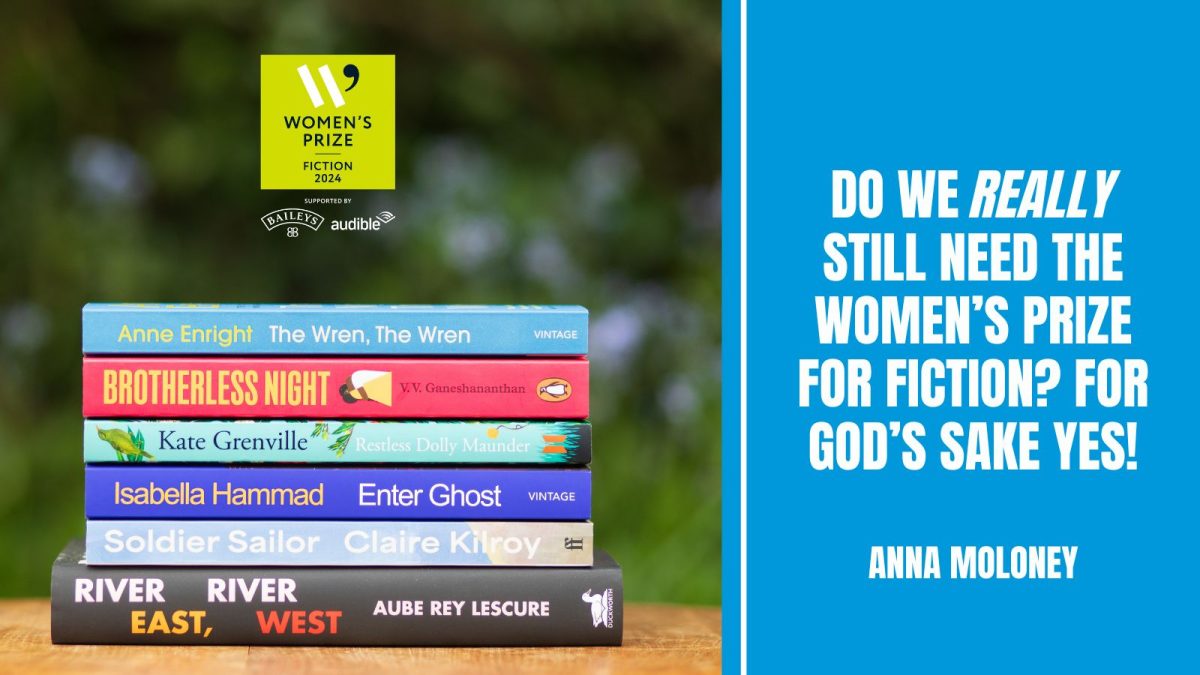
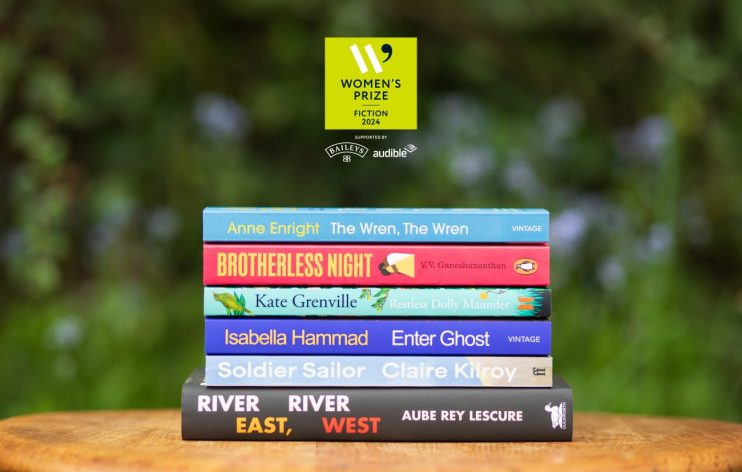
With the Women’s Prize set to crown its 29th batch of winners next week, some might wonder whether there’s still a need for such a prize. But a look at our reading habits should leave us in no doubt, writes Anna Moloney
When the Women’s Prize for Fiction, then known as the Orange Prize, was established in 1996, not everybody was happy. Journalist and novelist Auberon Waugh, the eldest son of Evelyn Waugh (who had never been given a step up in life) dubbed it the “Lemon Prize”; prominent literary critic A.S. Byatt, who refused to have her novels considered for the award, said it was sexist; and Germaine Greer, a major if controversial second wave feminist, scorned that it wouldn’t be too long before there was a prize for “writers with red hair”. Such special treatment, they finger-wagged, was patronising and unnecessary. And if recent hot-take pieces on the prize are anything to go by, there is a significant number who still believe the same thing.
“Well that’s a charming idea!” renowned historian, and chair of this year’s inaugural Women’s Prize for Non-Fiction, Suzannah Lipscomb tells me, when I put to her that some think there is no longer need for the prize. “Unfortunately it is not true.”
And it’s hard to disagree. The creation of the Women’s Prize for Non-Fiction, awarded for the first time this year, hopes to act as a step towards closing the “authority gap”, a term coined by Mary Ann Sieghart, whose 2021 book gave evidence to a long-suspected truth: men don’t like to read women.
New research commissioned by the Women’s Prize has confirmed the trend, with analysis showing that for the top 20 best-selling female writers of last year, fewer than 20 per cent of purchases were made by men. Of these, the majority of sales were of classics as opposed to contemporary writers, presumably due to the added prestige of time, with Harper Lee particularly favoured. In comparison, 44 per cent of the top best-selling male writers were purchased by women.
The problem appears even more pronounced in non-fiction. We may concede that women can write good fluffy novels after all, but associations of reason, fact and authority have traditionally lied with men. Consequently, female writers of non-fiction are less likely to be reviewed than their male peers, with only 26.5 per cent of non-fiction reviews in UK national newspapers in 2022 allocated to books written by women, according to the Prize. And that translates into earnings, with the pay gap in non-fiction at 35.7 per cent in 2022 – a disparity that actually grew in the preceding decade.
Women are also less likely to win, or be shortlisted for, non-fiction book prizes, with only 35.5 per cent of books awarded a non-fiction prize over the past 10 years across seven UK prizes written by women. Meanwhile in fiction, a look at last year’s Booker shortlist, which notably featured more people called Paul than women, suggests its biases are yet to be fully removed. And indeed, since 1996, 19 of the 28 Booker Prize winners have been written by men.
But if men are reluctant to read books by women, how likely are they to read books recommended by women? Well, the Women’s Prize’s 2001 experiment, in which they set up a shadow judging panel of men to choose their own winner, gave a suggestion to the regard they held women’s opinions in. Paul Bailey, who chaired the shadow panel despite expressing his contempt for the whole prize, said the women chose “worthy books about issues which we found anathema” and went “soft when it came to the crunch”. The exercise was never again repeated.
Other than championing women’s work, the Women’s Prize is also distinct from the Booker and other prizes in that it specifically values “accessibility” in its judging criteria. Monica Ali, head of the judging panel for this year’s fiction prize (and indeed Booker-nominated author of Brick Lane) is quick to emphasise to me that this criteria does not refer to a book that is “dumbed down”, but rather a book that invites the reader in and, as she astutely puts it, is not “up its own backside”. And thank God, because we get recommended enough of those.
Who gets to choose the 2024 winner?
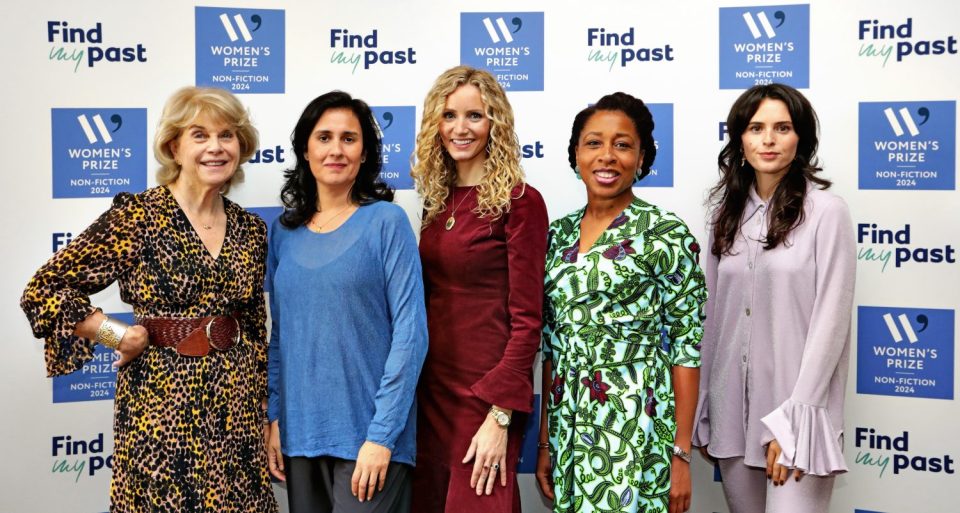
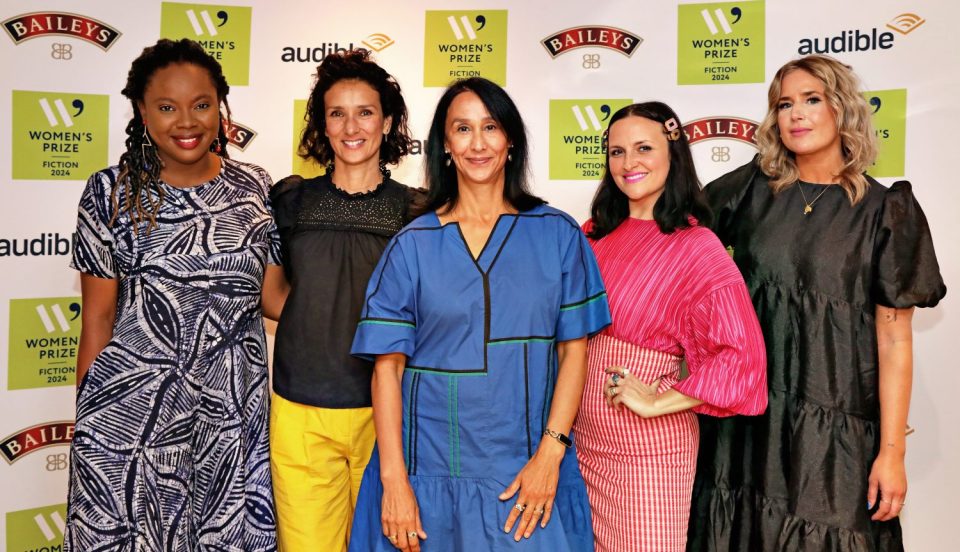
The winners of this year’s Women’s Prize will be announced at a ceremony in London next Thursday, where two writers will be awarded £30,000 apiece and a guaranteed boost in book sales. But who makes the call – and how do they do it?
While some prizes, including the Booker, require every judge to read every book submitted, the Women’s Prize takes a slightly more laid back approach, with every entry read by at least two judges, but it’s fair to say it is still quite the task. “It just means that a lot of other things don’t get done,” historian Suzannah Lipscomb, who is chairing the five-strong panel of judges for the Non-Fiction Prize, tells me matter of factly. Likewise, Fiction Prize chair Monica Ali, who described this as her first ever time being in a book club (and a rather prestigious one at that), conceded it did “take over” her life, though she found the task “hugely enjoyable”.
Books are judged on three core tenets: excellence, originality and accessibility, though Lipscomb doesn’t hide that it’s not a perfect science, with judging art always a subjective process. “I’m not going to say they’re the best books, but they are very good. A lot of care has been expended on them to the level of the sentence.” Lipscomb added that the panel fostered a culture of “positive judging”, with there being “no time and no purpose in denigrating people’s work”.
Previous winners of the Fiction Prize include Zadie Smith for On Beauty and Barbara Kingsolver for Demon Copperhead, while the Non-Fiction Prize will be awarded to its first winner this year.