
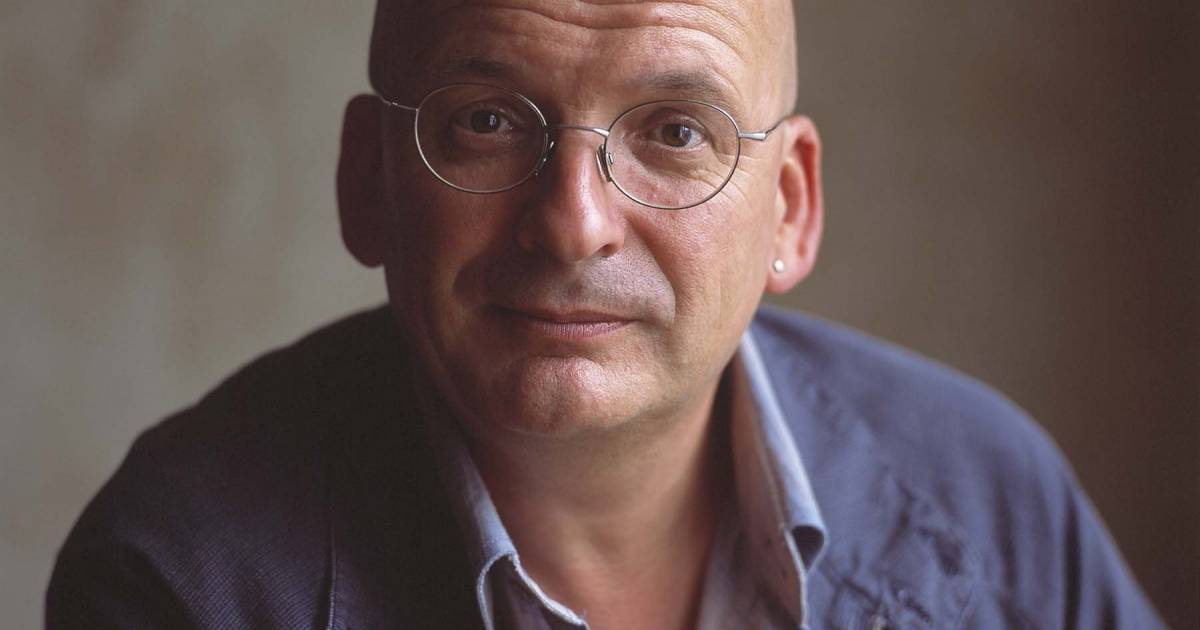
With his new novel The Dead Republic, acclaimed Dublin author Roddy Doyle completes a trilogy that began with 1999’s A Star Called Henry, focused on the character of Henry Smart, a street-hardened wanderer whose long life is entangled in the big events of 20th-century Irish history, from the Easter Rising of 1916 to the Troubles that start in the 1960s and echo violently through the following decades.
Here, in this recent interview with the Straight at a downtown hotel, Doyle discusses about the long perspectives on Ireland offered by Henry’s winding story. He also talks about the real-life icons who populate The Dead Republic, among them the Hollywood movie director John Ford, for whom Henry acts as a kind of “consultant” during the making of Ford’s blarney-filled 1952 ode to the Emerald Isle, The Quiet Man.
Along the way, Doyle touches on the stickiness of cultural stereotypes and the strange tenacity of Irish identity.
Georgia Straight: Is Henry Smart in some ways meant to embody the last century of Irish history?
Roddy Doyle: I’m not sure that he is. I can see why people would say that, or kind of reach that conclusion, and I wouldn’t deny it, or I wouldn’t say, “No, you’re wrong.” Who am I to say that? You know, I write a book and people interpret it. And I did deliberately have him embroiled in big history and make him emigrate and make him come back, and then he’s involved again. So there’s no denying that I wasn’t evading things, but I don’t know that I ever saw him as embodying Irish history as such, you know? But, again, that’s not up to me. But I just saw him as a character, really.
GS: So it began with the character and he happened to set off at this particular time in history?
RD: Yeah, I wanted to write a good old-fashioned book—good, I don’t mean quality, just an old-fashioned book—really 19th-century type of Charles Dickens [novel], a very long life beginning at the beginning and ending at the end of that life.
It took form, then, because I had him growing up in the slums of Dublin”¦.I spent a lot of time poring over photographs and reading oral histories of Dublin. But I reached the point where I had to decide if he was going to be involved in the 1916 Rising or not—if I was going to send him into that bucket of history. And I decided, yeah, I would. Then it became, I suppose, more Irish in a political way and a historical way than it had been. And once I’d decided to do that, it stuck, you know? Happily stuck, because I made up my own mind, and that’s the way the story was going to go from then on.
So I can see why that notion that he embodies Irish history, in a way—I can see why people would say that. It’s flattering, in a way, but it’s not what I really had in mind.
GS: In the earlier stages of The Dead Republic you have the director John Ford shaping his idealized vision of Ireland, and later on you show Irish republican militants creating their own kinds of mythology about the Irish past. There’s so much here about history as storytelling.
RD: And who owns the story, really—who gets to tell the story. It’s about identity, I think, as much as anything else. I suppose you’re always aware of what you’re doing, but I always think themes are best left to examination papers—you know, what is the theme of this book? I couldn’t help noticing that, when I was writing, it was all about identity, and who owns the definition of what it is to be Irish. Or what are the influences of a film like The Quiet Man? It had lots of influence on the way a people are perceived from overseas, and then actually how we perceive ourselves”¦.In this case [The Dead Republic] it was the armed struggle, the war of independence and how that kind of shaped Irishness. Who owns that?
GS: And at that point in the last century, you had certain Hollywood figures who had a certain relationship with Irishness and Irish identity. In the book there are many pointed exchanges on that idea.
RD: Oh, yeah. But I was really enjoying it, you know? The time had come to say goodbye to John Ford because the temptation was I liked him as a character—very strange, because he was a real human being—but I really enjoyed creating the fictional version, that kind of fascinating monster of a man. It was hard to let him go, then. But he did define a certain Americanness. He made John Wayne, who embodied America as Americans wanted him to be. And he fashioned the history that European Americans are comfortable with. So he did the same thing to a degree with The Quiet Man, with John Wayne again. Great film.
GS: The movie has a very sentimental edge, doesn’t it?
RD: Oh, very much so, yeah. It was based on a story that appeared in the Saturday Evening Post in the 1930s—which was utterly humourless, really—about an IRA man. But the political content dropped off the floor before it was shot. But it’s a romantic comedy of the highest standard. Brilliant. Very, very funny. Great lines and beautiful to look at, and John Wayne and Maureen O’Hara do look not only as if they love each other, but they do look as though, if the camera wasn’t there, they would be, you know, making love no problem whatsoever. And it’s rare enough that you get that kind of chemistry, and it’s there.
GS: Henry has very strong reactions against this kind of sentimentality. He’s a very unsentimental figure. Yet he’s clearly helping and enabling at every stage to create the sentiments of the movie.
RD: He colludes in the whole thing, there’s no doubt. He knows. Ford is actually quite up front about it, really. It goes further than Henry actually allowed himself to imagine it would go, insofar as it bears absolutely no resemblance whatsoever to his life. But when he reads the script, he feels shame more than anything else, because he has allowed it to happen. He does know that.
So it takes the common Hollywood story about people going there to make a film and ending up making an entirely different one—it takes it to an extreme. But I wrote a script based on Liam O’Flaherty’s novel Famine….It’s actually a tragedy set during the Potato Famine, and it’s the quick decline of a whole society. But there’s a love story at its centre—it finishes up with two people escaping to the United States on a boat. They survive, but all the rest of the family are gone, dead. There’s one chapter in the book where the character stops and listens and there’s no living being to be heard at all. All the animals are gone, everything’s gone, the place is dead.
And so I did a script, myself and the producer—this is now 1994, ’95—and had a whole string of meetings. And in retrospect it was quite funny—at the time it was utterly soul-destroying, because they were there to meet the guy who wrote The Commitments, so they were waiting to see the Irish peasantry break into song. And the comments were bizarre, really bizarre”¦.It was called Famine. So they said, you know, “The title will have to go.” What’s the point of that? You can have that standard picture of two men and a woman, a standard poster picture, and if it’s not called Famine, it can be called anything you like—but these are going to be peasants who are starving to death. The trailer is going to have to hint at it. So it’s just stupid—you know, “So many people die,” and I’m saying, “Yeah, one to two million people did starve to death. This is what happened.”
GS: In The Dead Republic there are funny exchanges between Henry and Ford in which they’ll be talking about an English villain in the script and Henry will say, “That’s not how it was,” and point out that the real-life person that the character is based on was in fact Irish. And John Ford will say, “He’s English—we’re going to make him English.” There are these shortcuts for the sake of story.
RD: Well, Henry had nothing against the English whatsoever. It was a class war, as far as he was concerned. He wanted to overturn the whole system. He was a socialist in some ways, before it was depicted in that traditional way”¦
When I was a kid in school, somehow or other we felt that all the soldiers were English, all the cops were English, just because they were the enemy. But actually they weren’t. They were Dublin people, they were Irish people—we learned that later. Dublin was full of garrisons, you know? They were one of the bigger employers. Most of the soldiers were actually Irish. So it’s a bit more complicated than seemed to be the case.
So Henry shot a cop in A Star Called Henry—walks up to him and shoots him in the back of the head. Not a pleasant piece of work, that cop—not a pleasant thing to do, Henry. It was an Irishman killing an Irishman.
But Ford is right, in a way: how do you explain that? How do you explain that to somebody who doesn’t know? How do you explain that? Make one of them English. Good guy shoots the bad guy. And you can’t shoot him in the back of the head—you can’t do it. Ford tells Henry, “You can’t do that.”
GS: In a moment of realization Henry says, “I tried to tell the truth but I had ended up inventing another Ireland. Just like Ford had done to America.” Is that always a risk, always something you have to be aware of, in any kind of storytelling?
RD: I think, actually, that if you’re arrogant enough to think that something you write is going to influence the way your country is defined, you probably need a cold shower. But actually, in a way, I’ve been very, very lucky in that I’ve been involved either individually or with a group of people who have somehow had a strong impact. The Commitments, the movie, had a colossal impact on the way Ireland was depicted both within the place and outside. Ireland became urban somehow. There’s no countryside, I don’t think there’s a blade of grass in The Commitments. That’s deliberate, very, very deliberate. When I was writing the book, I was just writing the book. I had to publish it myself—no one else wanted it. So I wasn’t thinking about shaping the soul of my nation [laughs]. I’m lucky enough in that it did have that big impact.
But I think if I sat down, you know, “I’ll write something now that will redefine what it is to be Irish,” I’d be some clown, really. I think you just concentrate on the characters and the story that they’re dragging behind them. That’s what I would hope.
GS: While creating fiction, how easy is it to fall prey to the kinds of simplifications that are out there in the world, especially when you’re writing about a culture other than your own—in the case of The Dead Republic, when you’re talking about the United States?
RD: It’s one of the pitfalls, I suppose. It’s part of the job, trying to avoid clichés and stereotypes, maybe playing with them a bit. It’s part of the job, part of the decision-making process, really.
But it’s almost inevitable. Say if I have a story with a group of middle-aged Irish people, men, and set it in a pub because that’s where they meet, actually, in most cases—if it’s not at work, they meet in the pub; they tend not to go into each other’s houses, they meet in the pub, if it’s just purely the men and not their partners or something like that”¦
So I write a story and it’s got four men in the pub, and they’re all drinking Guinness—it’s cliché. It’s absolutely cliché. And they laugh and they talk about football and, you know, they use words that are unique to Dublin—it’s cliché. It’s also true. So I give one of them a glass of Merlot and a Polish accent, just to wobble it a bit, not because I want to be politically correct somehow. Or one option would be to make one of them go into the restroom and start snorting cocaine and come back out again. I’ve never seen that happen, but it does happen. So that would jolt it a bit—it would be Guinness and coke. That makes it a bit more interesting, possibly. Maybe not, but maybe so.
I think sometimes it’s hard to avoid the cliché because the cliché and stereotype is actually often built on something tangible, and I suppose you try to fashion it to your own needs. But I think if I was overly aware, if I was thinking, “Oh gosh, I can’t have them all drinking Guinness”—fiction isn’t honest anyway, but if you want it to seem true and you’re just giving one of them something else because you don’t want all four of them drinking Guinness, you’re becoming somehow a fashion designer, not a writer.
GS: On that note, it’s hard to think of two nations more aware of each other as symbols than Ireland and the United States over the time that Henry’s alive. They’re almost misled by their perceptions of each other.
RD: They bounce off each other, and Ireland’s role or its perceived role—I don’t know why it actually works—but I suppose the reality is most Americans would claim ancestry from all sorts of different places, and sometimes if there’s a whole variety available they claim the Irish one, and I’m not sure why. It could be because it’s a guilt-free trip somehow. If you’re German, you’re a Nazi. If you’re Italian, you’re a fascist. If you’re French, you’re, uh, a coward [laughs]. Ireland, uniquely in western Europe, is a colony, you know? And I suppose it’s a more attractive option than the others—I don’t know, really.
But they have had an influence on each other—you know, the influence of Irish music on American country music, and the influence of American country music and American music generally on Irish music. So there is an interesting back-and-forth between the two. But it’s the misreading which I think is more important one way—that notion of Ireland as a theme park somehow, that sentimental picture that Irish-Americans have of the place, and how we who live in the place try to live up to that”¦.And it became a big version of The Quiet Man somehow.
GS: It is amazing how people of Irish descent in North America stick to that identity even when their ancestors came over here a century or two ago.
RD: At reading events I get that all the time, particularly signing books, and I find that perfectly all right. As far as I know, on both sides of my family there’s never been anything else—it’s Irish, east-coast Ireland. But if I found out that, for example, my great grandfather was a Lithuanian Jew, I’d be telling everybody. It’s a bit of exotic blood. I’d be delighted. I’d be looking for my roots, I really would. It would be quite exciting.
So I can well imagine why people do wear Ireland as a badge. Fair enough. As long as I’m not cornered for hours while they tell me their life story, and “Do you find this interesting?” which invariably I don’t. But I can see why people identify.
GS: It’s as if people are hoping for a kind of authenticity that they don’t feel is available to them here, and they assume that if you’re from Ireland you just swim in authenticity.
RD: And we’re such a laugh, and we all sing and dance and fight for freedom [laughs].