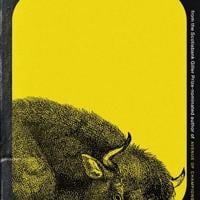
Conor Kerr’s novel “Prairie Edge” weaves together a story involving the impact of colonialism on today’s Indigenous people as well as the brutalities that Indigenous foster children continue to face.
Kerr, a Metis/Ukrainian writer living in Edmonton, Canada, uses storytelling to make his points. Throughout his novel, Kerr follows Metis cousins Ezzy Desjarlais and Grey Gunther on their journey of making bad decisions which lead to misadventures.
This includes Ezzy and Grey’s plan to capture a herd of bison and release the wildlife in downtown Edmonton in Alberta. The idea is to disrupt the settlers which is their way of fighting back against colonialism. Indeed, there are many protests against colonialism in “Prairie Edge” as the Indigenous want to reclaim their land. The cousins face ongoing problems left by colonialism including loss of culture, but they also find a bond in fighting to retain their culture.
Kerr said bison were a focal point of life for the Metis and remain an essential symbol of reclaiming their culture.
He said the land, language and culture need to be reclaimed and stated that much of the society in Edmonton is Euro-centered.
“There are still plans to disassociate our people from their land,” he said.
Throughout the novel, the cousins try to take action to make things happen rather than waiting on the government. Kerr makes the point that Indigenous people cannot wait on government to make things right.
Kerr’s character talks about a Land Back program that brought some land back to the tribe that he originally saw as making a difference, but later viewed as a token gesture that corporations use for their diversity and inclusion programs.
“Now it was about survival. How we lived,” Ezzy said.
He talks about how the capitalist state has become a massive extraction enterprise.
“Ezzy learns what it’s like to be an Indigenous man in today’s world,” he said.
Kerr said the Metis have one of the highest rates of abstaining from alcohol.
“But we only see the bad instead of the beautiful,” Kerr said.
He said one of the ways that culture has been lost has been when Indigenous kids have had to join foster families and those foster families often took them out of their communities.
“It doesn’t have to be that way,” he continued. “We can figure out a better way. Through our communities, we need to know who we are and not be taken out of the community.”
One of the most powerful parts of “Prairie Edge” is when Ezzy talks about what it is like to be a foster child, waiting years to be adopted by a family that would love him.
“We dreamt of families and knew they weren’t far away. Families that wouldn’t just take us in because of the government money that went to the parents — families that wanted us for who we were…Enough freedom to finally be a kid. I’d wait forever for that,” Ezzy said.
Ezzy spoke about how it was hard to build resistance to colonialism when young men and women were constantly being removed from the community along with the old teachings and histories.
Kerr said it’s important for indigenous communities to build their own libraries so they can see Indigenous characters and not characters they cannot relate to.
“This is incredibly important,” he said. “We need to control our own narrative.”
Kerr emphasizes that forgiveness is also important for themselves and their communities.
“It’s not our fault that we went through colonialism. We need to live in a relationship with the land and work in a good way to move forward,” he said. “We need to forgive those who came before us just as we need to forgive ourselves.”
Kerr said today’s social media is a double edged sword for indigenous youth. He said there is a large audience of Indigenous youth on social media, but there are also social media sites that are exploitive.
He hopes that whether it’s social media or other forms of communication that Indigenous people listen to each other.
“There is so much that we can learn from each other,” he said.