
Authors often don’t know the trail their book leaves. At least I didn’t. Two years ago, I wrote about a teen who lacked strong social muscle, only to be told by trained professionals that “Alfred” exhibited all the signs of being neurodivergent. Not a fan of labels, I protested, but it didn’t really matter. The story is the story, and I love Alfred. Readers will decide.
Now comes the sequel, and my brother, a rabbi, asked me if I realized how completely Jewish its themes were. My response?
“I wrote about an unhappy teenager who writes her way toward peace and understanding. I think it’s a coincidence that it reads ‘Jewish.’”
As with “Alfred,” I am close to conceding my brother’s point. Maybe my DNA leads me to places I don’t realize.
The book’s protagonist, Hannah, is a 15-year-old straight-A-all-the-way teenage girl who is compelled to achieve. She keeps a to-do list in her hip pocket and always bears the weight of watching her 12-year-old brother while her mother works long hours. Hannah has an anger problem she doesn’t understand.
Enter “Coach,” who gives Hannah two ideas to ponder as she heads to spend the summer two hours away with her dad and his girlfriend, Lucy, and her brother, Ben. Coach suggests that Hannah:
- Scrap her to-do list and relax.
- Record moments of anger and ask herself whether she voiced her feelings and felt heard.
Hannah keeps a journal, and the summer unfolds with lots of quirky moments—on the tennis court, in the kitchen, in a family book club, and more. They all learn something, and, apparently, what they learn (according to my brother, the rabbi) is steeped in Jewish tradition.
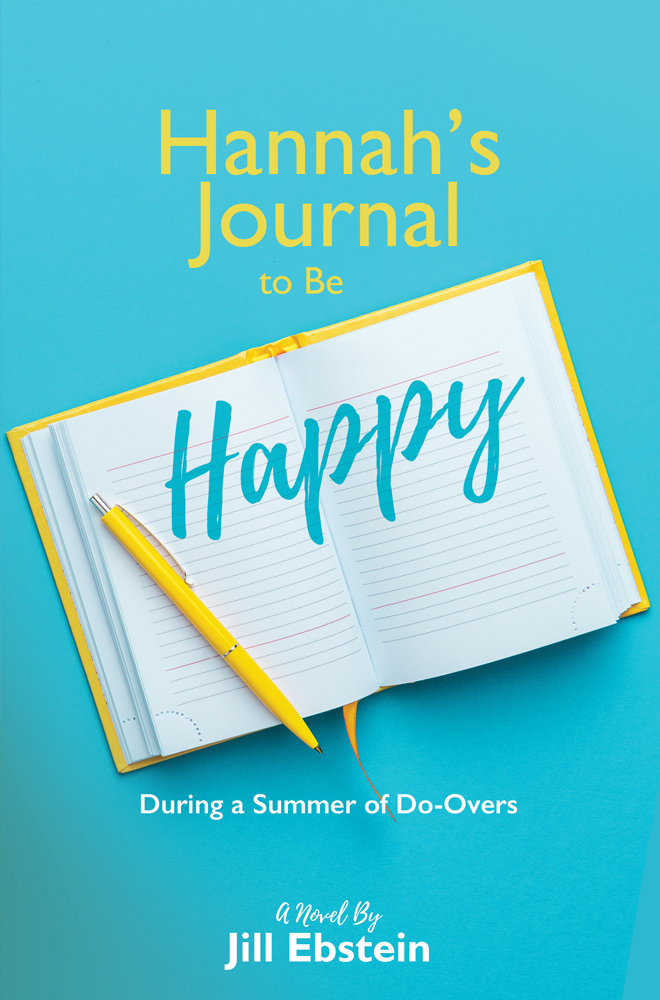
(Courtesy image)
Since we are nearing Shavuot and the celebration of the Torah, it’s a good time to dust off these lessons and see how they fit. Here is what my brother identified:
“Anger does not know its home”: These are Coach’s words as he explains that Hannah must work to identify the anger’s source. Now, the Talmud teaches that a person is judged b’kiso, b’kaaso, b’koso, their pocket, their anger, and their drinking patterns. We also learn that daily, God gets angry and prays, “May my compassion exceed my anger.” Maybe we are in God’s image.
The clock cannot be our master. Hannah needs to push less and relax more. How different is that from the Torah’s creation story, where God builds the world in six days and rests on the seventh, Shabbat? Leisure behooves us all.
See the glass half full: Hannah’s friend Alfred says that every story should end on a positive note. As Hannah works through complex family dynamics, she remembers this. It helps her eventually find a place in her heart for Lucy. So, too, when we read the Haftarah (the weekly selection from the prophets), the Israelites are often criticized, but the portion almost ends with a hopeful message. God still loves us.
Being heard to be understood: Hannah writes in her journal to make sure she has said her words and to decide whether she has been heard. Isn’t that precisely the message of Shema Yisrael, “Hear, Oh Israel”?
The “P” of peace: Hannah describes that each morning, she makes her bed, including hospital corners. She describes her two favorite “p” words—precision and perfection. But now she wants to add a third “p”—peace. She wants to find internal peace. So, too, at the end of synagogue services, we often sing a prayer for peace, “Oseh shalom.” We seek peace in our hearts and peace among nations.
The right amount of ego: Hannah beats her dad in a game of “Jeopardy!” and then wonders whether her ego is too large. Her brother argues that ego is essential to doing things well—”like playing tennis.” So, too, Hillel teaches us, “If I am not for myself, who will be for me; but if I am only for myself, what am I; and if not now, when?” Bottom line—we need a healthy ego.
Putting the bad points behind us: When Hannah experiences a rough time, her brother explains that in tennis, one has to put the bad points behind them and move on. Hannah uses this advice as she proceeds to build relationships within and outside her family. Isn’t this another version of Yom Kippur, where we seek to start with a clean slate? New beginnings are everywhere.
In short, my brother was right. While I didn’t create “Hannah’s Journal” with the Torah in mind, its lessons percolate through almost every story, with one obvious exception: Hannah’s family celebrates life with a banana cream pie. With Shavuot in mind, obviously, cheesecake would have been a much better choice!
This post has been contributed by a third party. The opinions, facts and any media content are presented solely by the author, and JewishBoston assumes no responsibility for them. Want to add your voice to the conversation? Publish your own post here.
MORE