The idea of women wearing many hats is not new to Lean Ong, who juggles a few roles herself. But she has begun to identify with those going through menopause or older ladies who are grappling with new concerns, especially those that affect the body and mind.
“I’m one of them. Right now, I find I get depressed a bit more,” says Lean Ong, 58, who is doing a doctoral programme on flourishing, happiness and mature Malaysian women at Universiti Tunku Abdul Rahman.
Health issues that have an impact on aged parents or even oneself are a big worry. “When the doctor tells you that you have cancer, what do you do? When you are unhappy, who can you talk to? Where do you go?”
To counter the effects of an ageing society, she notes, women are encouraged to continue working or go back to work. But they need to be physically and mentally fit to do that. “Who is paying attention to us?”
There is a lot of research in the West on the well-being of women aged 45 to 65, but not so in Asia. She wants to focus on their needs and offer a hand. “When I was going through depression, I found support online, where people were able to help pull me through.”
Pouring out her dark thoughts on paper helped too, says US-based Ong, who goes by the pseudonym Kopi Soh. In 2012, she wrote and illustrated Oh, I Thought I Was The Only One, published by Dawning Victory Consultancy. The book has stories of multiple individuals who struggled with psychological problems in secret for years because they were afraid of being humiliated and ostracised. It reminds readers facing similar issues that they are not alone.
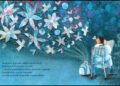
Oh … I Thought I Was the Only One 2, a sequel released the following year, is directed at children who feel anxious, scared and stressed out. Fear, pressure and worry often lead to loneliness, but there are ways to manage them. “And you don’t have to do it alone. The first step is to tell someone you are worried.”
The cases she describes are based on those she has counselled. “I tell the kids to talk to me and we can go through all the possibilities. I want to teach them to handle issues, like if they’re being bullied, don’t know how to make friends, fail an exam or feel angry because their parents are getting divorced. I hope the book will help start conversations, from a young age, so they know they can come to us and talk about it.”
Creating awareness and handling crises were part of a day’s work for Kopi Soh in the US, where she has lived for more than 30 years after obtaining her master’s in marriage, family and child counselling. As a sexual assault team responder for the county of San Diego in Southern California, she was basically the first to show up when anyone reported a rape.
And as a former service manager with a women’s centre in Penang, where her family moved to from Kelantan when she was five, she trained social workers and counselled those caught in domestic violence situations and young victims of sexual abuse.
She also founded the Facebook community Stick It To Me, so-called because of the stick figures she learnt to draw from YouTube. Now renamed Kopi Soh’s Positive Healing Doodles, this initiative produces “healing art” for the terminally sick and needy.
Initially, she drew to take her mind off the sad cases she could not help, particularly abused children. “I was affected a lot and beginning to feel burnout. Then hospitals asked for the drawings because they made the kids smile. We also gave them to parents in wards with their sick children.” As more requests came in, she reached out to other artists to contribute their work.
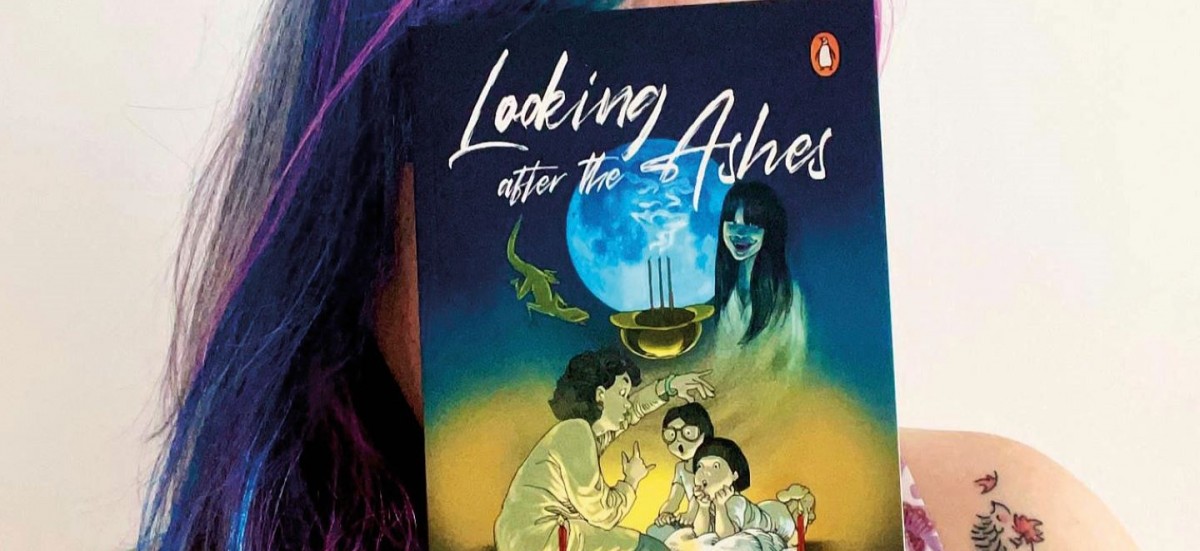
At the end of 2023, Kopi Soh returned to Penang for the festive breaks and stayed on because her mother had a fall and needed help. Home, where she grew up in a large extended Peranakan family surrounded by strong women, is the genesis of her book, Looking After the Ashes: Old Wives’ Tales, Taboos, Supernatural and Childhood Superstitions (Penguin Random House SEA, 2021).
The collection of stories, mostly from the author’s grandmother and aunts, highlights the customs, traditions and practices of affluent Peranakans in Penang, their foods and festivities, daily rituals and habits and, of course, the things they would never do — lest they incur the wrath of gods and ghosts.
“Grandma woke up at seven daily and then sat for a few hours combing her sanggul (bun). She would come down for her coffee, sit again to await lunch. She could call in the jeweller to create her own kerongsang [brooches used to fasten the lapels of the kebaya].”
“I want to raise awareness of this group of people because their traditions are slowly dying or have disappeared,” says Kopi Soh, who writes with a sure but light hand, guided by her childhood stories and insights into how the Baba and Nyonya lived and played, with Taoist influences in place. Illustrations by KULit Baru add humour to this work of semi-biographical fiction that sheds light on a group of people known for their rich heritage and unique cultural fusion.
Is she working on another book?
“I’m thinking of writing something that addresses the issues middle-aged women face. Hubby is going for another woman; something happens to their parents and they regret not doing more for them; their children are taking drugs; they have just been given a cancer diagnosis but cannot tell friends, who may give conflicting advice …
“We grew up being told not to wash our dirty linen in public. Women need something as a guide and to know they can get help. There is nothing shameful about admitting you have depression.”
There could also be another book on the Peranakan, those less well-to-do who observe different traditions surrounding food symbolism and other rituals.
This article first appeared on July 17, 2024 in The Edge Malaysia.