
In the pages of books illustrated and written for children, the sometimes-drab design of the real world transforms into a space of color and whimsy. There are phantom tollbooths, yellow brick roads, and bedrooms that blur into places where wild things are. The setting of a children’s book is often as interesting as the story itself.
A new exhibition at the National Building Museum in Washington, D.C., explores the buildings, environments, and worlds that exist within these stories. Including visuals, themes, and characters from more than 150 classic and contemporary children’s books, Building Stories is an immersive exploration of the ways the built environment has played a significant role in children’s literature. From the “great green room” in Goodnight Moon to the tornado-tossed house in The Wizard of Oz to the spatial and scalar transformations in Alice in Wonderland, the exhibition looks at the ways the physical settings of children’s books feed into the stories they tell and the lessons they impart.
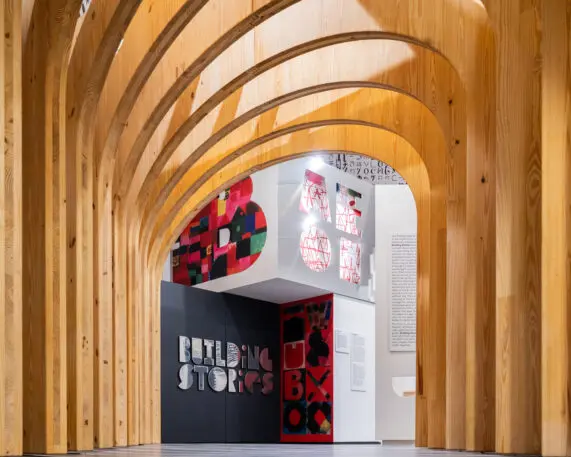
“Buildings are often not just the background of books, they are one of the characters of many, many, many children’s books,” says Cathy Frankel, deputy director for interpretive content at the National Building Museum.
The idea for this exhibition dates back nearly a decade. Frankel had seen an exhibition on the history of children’s books at the New York Public Library in 2013 and started thinking about the many books and stories that feature buildings. She saw a potential version of this exhibition focused more pointedly on the National Building Museum’s subject matter. “At the time I was thinking about construction,” Frankel says. “This would be about physical building and actual buildings.”
Eventually she reached out to the curator of the NYPL exhibition, children’s books expert Leonard Marcus, and invited him to help bring the concept to life. The first formal meeting on the project was in early 2019. Marcus asked members of the museum’s staff to come to the meeting with one recommended book to include in the show.
“It was really such an interesting variety of books,” Frankel recalls. (Her selection: Eloise, the story of a little girl who lives on the top floor of the Plaza Hotel in New York City.) “What we walked away with at the end of the day was [that] children’s books are about children finding their way in the world.”
That gave shape to the exhibition now open at the National Building Museum, which uses books from 28 countries published over the past 150 years to show how built spaces become a key part of the way children experience, process, and engage with the world.
One of the main galleries focuses on the concept of home. “The need for a sense of place in the world, the need for home is in a way the central theme of all children’s books,” Marcus says. “It’s a very rich and complex subject and there are children’s books about every single aspect of it. And even better, they’re illustrated, so we were able to get all sorts of incredible visuals.”
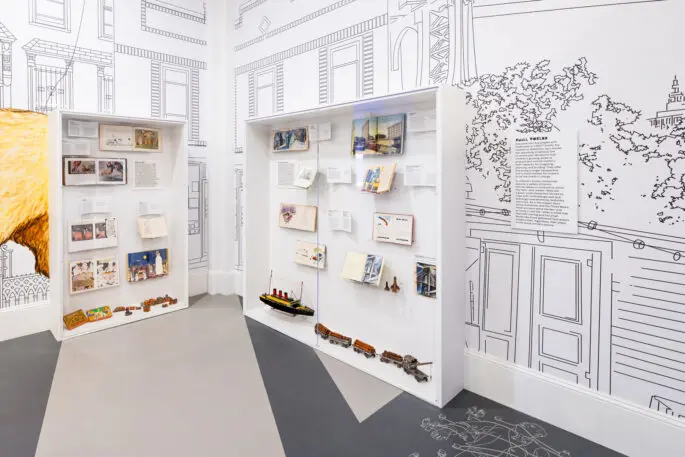
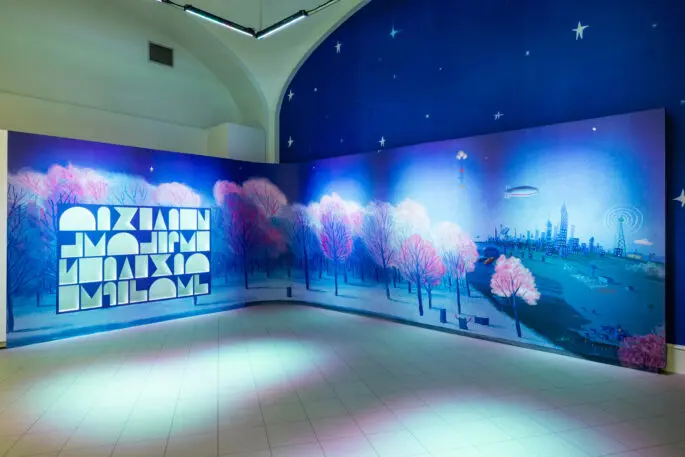
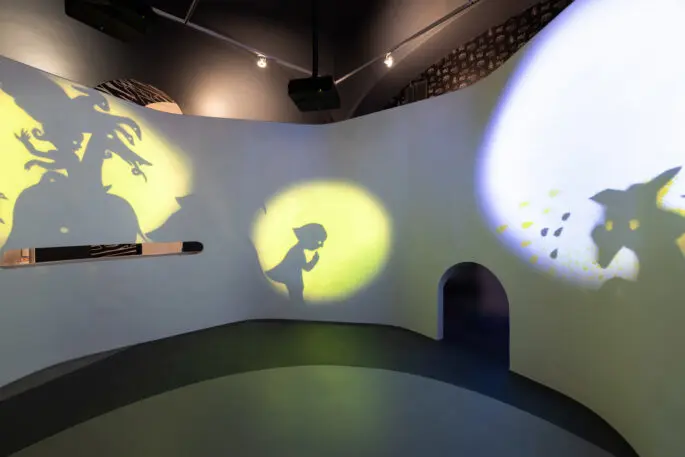
The exhibition was designed by Plus and Greater Than, an exhibition and experiential design studio based in Portland, Oregon. Its cofounders, Traci Sym and Daniel Meyers, embraced the plethora of subject material to bring the show to life. They call their approach “maximalist,” and created a mix of galleries that feature artwork and illustrations, conceptual interpretations of building blocks, re-created scenes from classic stories, and pathways that mimic the narrative tools used in children’s books. The threshold to one gallery, for instance, alters scale in a way that recalls Alice’s trip down the rabbit hole. “It’s a weird, tapered tunnel that makes you feel like you’re shrinking,” Sym says.
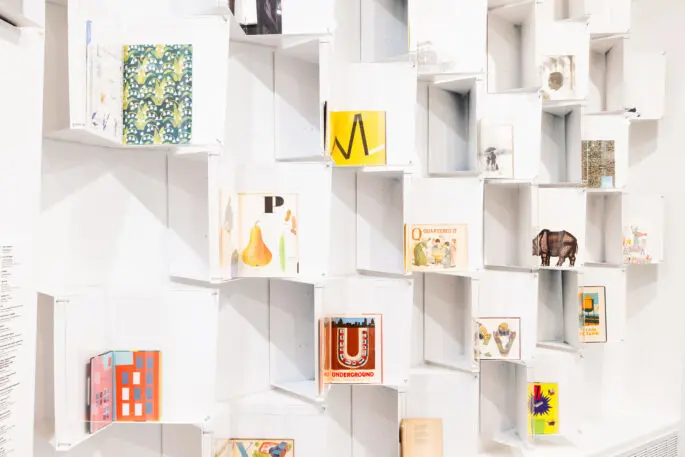
The exhibition includes children’s books across the age spectrum, from toddler-centric titles to more mature children’s stories like The Phantom Tollbooth. It’s intended to offer something for children of every age, and even different takeaways if they come at different ages. The exhibition will be on display in the museum for 10 years, allowing for recurring experiences. “We’re really making something for kids in D.C. and visitors who come here to grow up in,” Sym says.
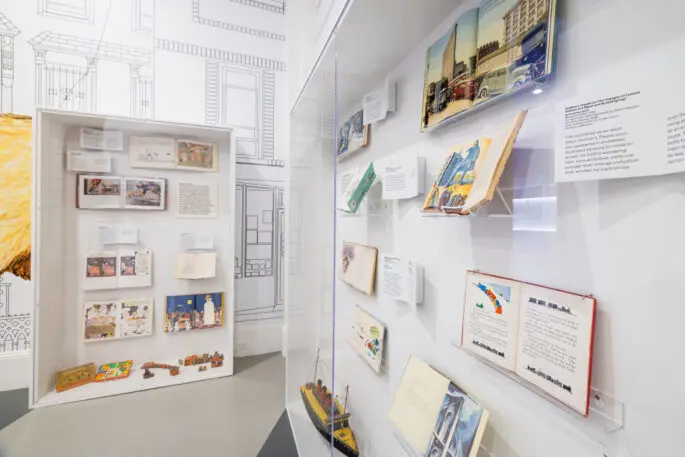
It’s also intended to appeal to adults, both those who’ve read some of these books to their children countless times and those who may only vaguely recall them from their own youth. Frankel says the museum’s curators were focused on not making it a balance between parts of the show that would appeal to kids and parts that would appeal to adults. “This is actually an everyone show,” she says.
The final gallery emphasizes the importance of children’s books in guiding how people—both children and adults—experience and understand the world around them. It looks at the ways characters in children’s books have taken agency over their environment to make a positive impact on themselves and others.
“I think of children’s literature as the literature of hope. And every children’s book in some way expresses the hopes and dreams of one generation for the one that it’s making the book for,” Marcus says. “This show is full of the promise of the world as it is expressed through the way we shape it.”
Recognize your technological breakthrough by applying to this year’s Next Big Things in Tech Awards before the final deadline, July 12.
Sign up for Next Big Things in Tech Awards notifications here.