
If I could go back to any time in my life, I would choose the years between my girlhood and womanhood. Just for a day. And just to appreciate what I was noticing, doing, thinking, and feeling. That was a rich time of discovery and simple joy. Equally, as I grew older, I also came to understand how young women’s experiences are dismissed. Multiplied tenfold in Black girlhood, as we come of age we are watched, never seen. Both our innocence and insightfulness are often denied.
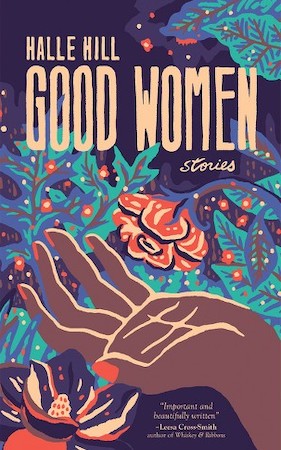
When I began writing my short story collection Good Women, I wanted to acknowledge those opposing thresholds and give them voice. I sought to remember these times in my life and the lives of women around me, not for the sake of biography, but for accuracy. In the clarity of that tender season, I first learned to fear and anticipate what was waiting: the dangers of beauty, dangers of men, first tastes of freedom, first tastes of self, and the painful distinctions that would soon come with adulthood: Would I stay or leave?
As Ntozake Shange said, “somebody/ anybody sing a black girl’s song.” These collections surely sing songs of young womanhood and celebrate them. They urge us to listen.
Woman Hollering Creek by Sandra Cisneros
“I don’t think they understand how it is to be a girl,” notes the young narrator in “One Holy Night”, a story in Sandra Cisnero’s collection Woman Hollering Creek. She enters a relationship with a predatory older man-child she calls Boy Baby. He promises to “love her like a revolution”. When Boy Baby inevitably leaves her, she must deal with the after effects of his abuse and the cultural ostracization she faces for bearing his child. As time passes, she is stuck with poignant observations about love, relationships, family, and gender.
Cisneros’s stories shine like this across the board: luminescent, somber, and transcendent, balanced by sharp whips like; “Once you tell a man he’s pretty there’s no turning back.” The prose in this collection is unlike any other I have read, lyrical and wholly fresh. Here, the broken hearted soar and circle their loved ones with infinite hearts, moving from girls to women, and eventually becoming ancestors, continuing the boundless cycle. As one narrator writes in a letter left at a shrine to The Virgin of Guadalupe in the story “Little Miracles, Kept Promises”, “I am a snake swallowing its tail. I’m my history and my future. All my ancestors’ ancestors inside my belly. All my futures and all my pasts.”
How to Breathe Underwater by Julie Orringer
Julie Orringer’s collection, How to Breathe Underwater, explores the power of girls and women in nine captivating stories. Through wisdom, big hearts, and poignant questions, female protagonists navigate their worlds with restraint and intelligence. Orringer’s writing delicately weaves girlhood as a time of painful awakening and keen intuition.
In the collection, Orringer skillfully portrays the struggles of her characters: a sister coping with the death of her brother’s girlfriend who drowned, a woman battling addiction while caring for a child, cousins navigating envy, competing for intelligence and beauty. In the story, “The Smoothest Way is Full of Stones”, a young woman finds her place within a religious family, alongside her cousin, as her mother recovers from a traumatic birth. God feels inescapable. “Tree frogs call in the dark, the rubber band twang of their throats sounding to me like God, God, God.” As the summer continues, the pair begin to face crucial choices. The story culminates in a liberating moment as they venture out to meet a forbidden boy they both deeply admire. “How to Breathe Underwater” captures the fragility of girlhood and womanhood with grace and insight.
Before You Suffocate Your Own Fool Self by Danielle Evans
I cherish books that portray Black women as complicated, misguided, and fully human. “Before You Suffocate Your Own Fool Self” by Danielle Evans delivers that and more. In Danielle Evans’ 2010 debut collection, characters grapple with defining their personal sense ethics.
Stories are filled with uniqueness, intricacy, and unflinching observation, but what truly captivates is the collection’s emotional elegance. Evans’ voice exhibits empathy with remarkable restraint, respecting her characters by portraying them with honesty. Her prose is clear yet challenges readers to confront discomfort, compelling us to sit with the conflicted minds of her characters. The book values mistakes and trusts these young women as they navigate their cruel and vibrant worlds.
The Moths and Other Stories by Helena María Viramontes
Being a woman of color carries a significant cost. Within our own cultures, we face expectations of excellence, while non-POC outsiders look down on us with self-righteousness, contempt, and disgust. The constraints of gender add further complications. Despite this intersectional battle, we stand in our power with an unshakable sense of pride and self-determination. In this book, the characters, particularly Chicana women, strive to break free from societal limitations imposed by the church, the patriarchal male gaze, prejudice, and economic injustices. Viramontes writes with delicate yet unsentimental prose, portraying her characters as resilient, cautious, and observant, seeking empowerment in their minds, bodies, and sexualities.
Two dominant stories stand out: “The Long Reconciliation” follows a woman who marries far too young. She grapples with understanding her sexuality and erotic expression, “Sex is the only free pleasure we have,” but faces stifling male dominance and religious pressure. In “Birthday,” a young woman confronts the decision of having an abortion and battles feelings of fear, shame, and liberation, driven by an all-seeing, condemning God. These necessary stories in “The Moths” reflect the complexities and struggles faced by women of color, resonating with readers across generations.
In Love & Trouble by Alice Walker
Alice Walker’s In Love & Trouble presents thirteen stories that portray the complexity of Black women through pivotal moments of choice. Walker’s voice is true, evoking the impact of generations in vignettes of family ties, trauma, freedom, pleasure, fear, and disgust, often within a simple sentence. “She dreams; dragging herself across the world.” Her characters possess a prophetic quality, and their humor adds depth to their narratives. Despite its brevity, the book’s impact lingers long after the first read, with “Everyday Use” standing out as one of the greatest short stories ever written. Across the collection, the intergenerational observations are knife-sharp, and the language so piercing it will move readers to tears.
A Day, A Night, Another Day, Summer by Christine Schutt
As Tiffany McDaniel opens, in her novel Betty, set in Ohio Appalachia, “A girl comes of age against the knife.” Becoming is brutal. The mystery of this transformative journey is where a poets’ touch becomes essential, helping to articulate the ineffable. While writing Good Women over six years, I turned to poetry, both for pleasure and to hone my ear. Discovering Christine Schutt’s short fiction was a gift: embodied short fiction, the poet’s way. Her collection, A Day, A Night, Another Day, Summer, carves through time with a tactile dream-like quality. The language is concise, rhythmic, and economical, never wasting a word. “Her teeth, her lips, her lip-like part.” Each story presents a unique world, dark and pulsing, where women and young women grapple with the worst of it: illness, impending death, dangerous love, abuse, and unspeakable taboos. Reading these stories reveals a seeping, feminine magic that’s alive. Something feral and angry. Something you can’t quite put your finger on.
Black Light by Kimberly King Parsons
My favorite childhood friends were weird girls who had something just a touch off about them. When my family moved from the predominantly Black, working class Mechanicsville to the Knoxville suburbs, I learned to assimilate as a child. By the time I went to high school, I had lost a sense of self and place. I was too self-preserving to rebel in the ways I wanted to, so I lived vicariously through young women who dared to buck back.
Those cool girls are exactly the ones I admire in Kimberly King Parsons’ Black Light. They are enigmatic, searching, often mean, and refreshingly authentic. I’m reminded of the story “Glow Hunter,” which follows two girls on a Texan summer escapade, exploring the electric place of female friendships between companionship and deeper desires. Mushroom trips and lengthy car rides become their means of fantasy, while themes of parental abandonment loom in the background. These strange women claim their space, as echoed in the concluding lines of “We Don’t Come Natural to it.” A narrator, battling an eating disorder, realizes she’s locked out of her apartment, while drunk, in the early morning. Desperate for someone to hear her, she sings into the call box, repeating to anyone awake and listening, “It’s me, It’s me, It’s me.”